The headquarters of the GDR’s Ministry for State Security (MfS) was first established in Berlin’s Lichtenberg district in 1950. For nearly 40 years, the Stasi organised the surveillance and persecution of the population on behalf of the ruling Socialist Unity Party of Germany (SED) from here.
The Stasi was a domestic secret police, investigative agency and foreign intelligence service all in one. The ministry had its own remand prisons, weapons and guard regiment. It had nearly 90,000 full-time employees in 1989.

The Former Stasi Headquarters
Expansion of the Stasi in Lichtenberg
The MfS established its first headquarters in the tax office at Normannenstrasse 22 in Lichtenberg, which until then had been a quiet neighbourhood characterized by gardens and residential buildings. Over time the buildings and streets began to disappear behind walls and fences. In 1964, House 1 became the focal point and ministerial headquarters. The grounds developed into a militarily-secured secret service compound that was sealed off from the surrounding area.
The Stasi headquarters underwent constant change: Most recently, it covered an area of 22 hectares and contained about 50 buildings where 7,000 employees worked. House 1, House 7 and House 22, three important areas to the apparatus’ operations, are grouped around an inner courtyard between Normannenstrasse, Ruschestrasse and Magdalenenstrasse.

The Stasi moves into the Lichtenberg finance office, a five-story building erected in 1931 and expanded in 1938.
Quelle: BArch, MfS, ZAIG, Fo. Nr. 61, Bild 6
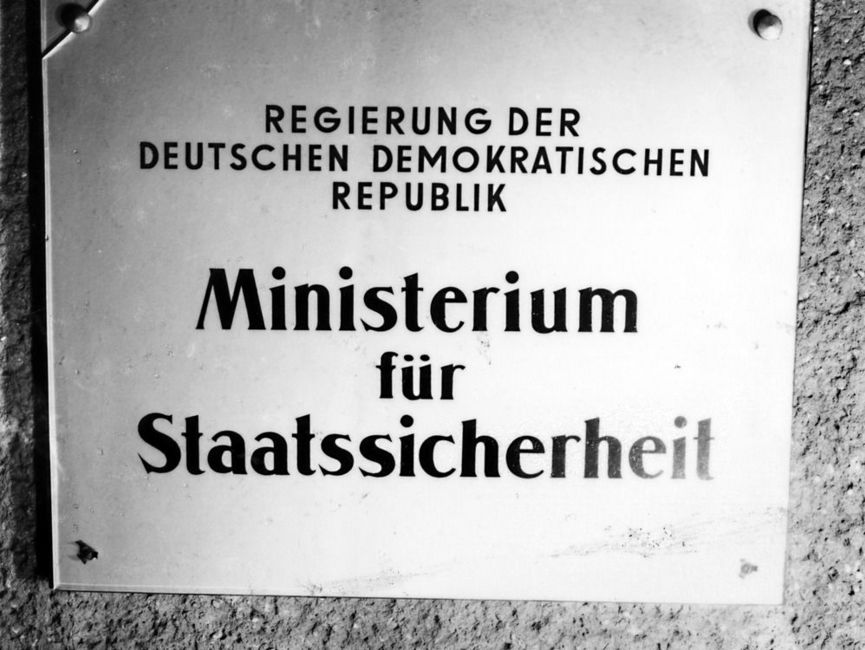
Sign at Normannstrasse 22, the Stasi’s official address
Quelle: BArch, MfS, ZAIG, Fo. Nr. 61, Bild 5

Festive event with a cultural program and banquet in House 2, attended by Walter Ulbricht, Erich Mielke and Erich Honecker, ca. 1960
Quelle: BArch, MfS, ZAIG, Fo 1558, Bild 35
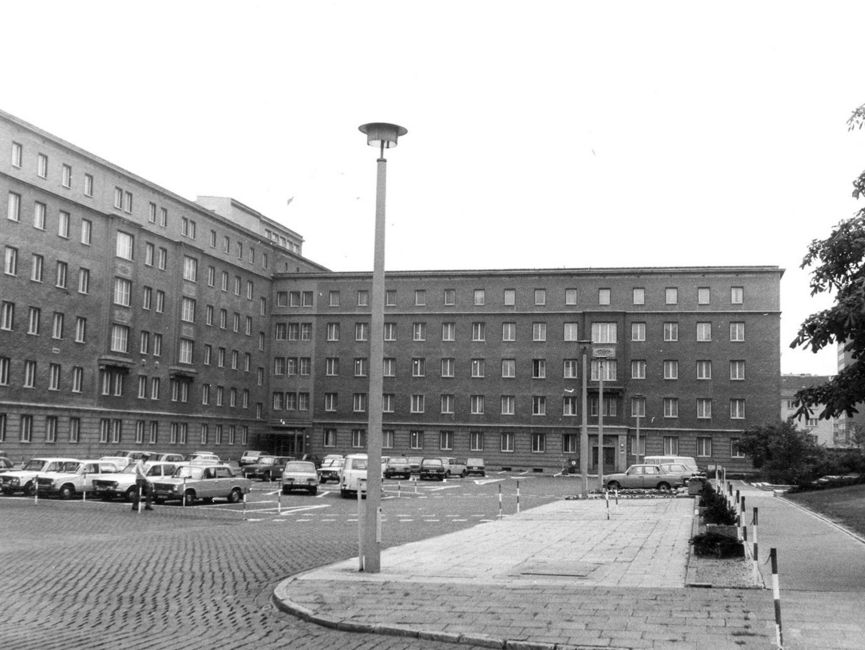
Completion of the second office building: The new L-shaped building was erected in 1956/57 as one of many projects to expand the Stasi headquarters. Several units worked here up to the end, most notably HA XX (state apparatus, churches, culture, underground).
Quelle: BArch, MfS, BdL, Fo, Nr. 82, Bild 463

An employee of the Stasi’s Main Department XX. He appears to have been photographed by a hidden camera for testing purposes, ca. 1977.
Quelle: BArch, MfS, HAXX, Fo, 1019, Bild 12

A separate polyclinic with an infirmary provided medical care to Stasi employees. In 1966, an annex was added to the clinic (House 20).
Quelle: BArch, MfS, BdL, Fo, Nr. 296, Bild 32

On the hill where the so-called Köhler'sche Schrottmühle had once stood, the MfS had a dining hall built for department heads with a conference room on the upper floor.
Quelle: BArch, MfS, ZAIG, Fo 598, Bild 26

Reception in House 22 in honour of the 20th anniversary of the MfS (Erich Honecker and Erich Mielke)
Quelle: BArch, MfS, ZAIG, Fo, Nr. 2465, Bild 231

Eight-story building containing the offices of Stasi Minister Erich Mielke
Quelle: BArch, MfS, BdL, Fo, Nr. 82, Bild 467

Erich Mielke and the MfS guard regiment shortly after the minister moved into House 1, 1964
Quelle: BArch, MfS, ZAIG, Fo 1605, S. 4
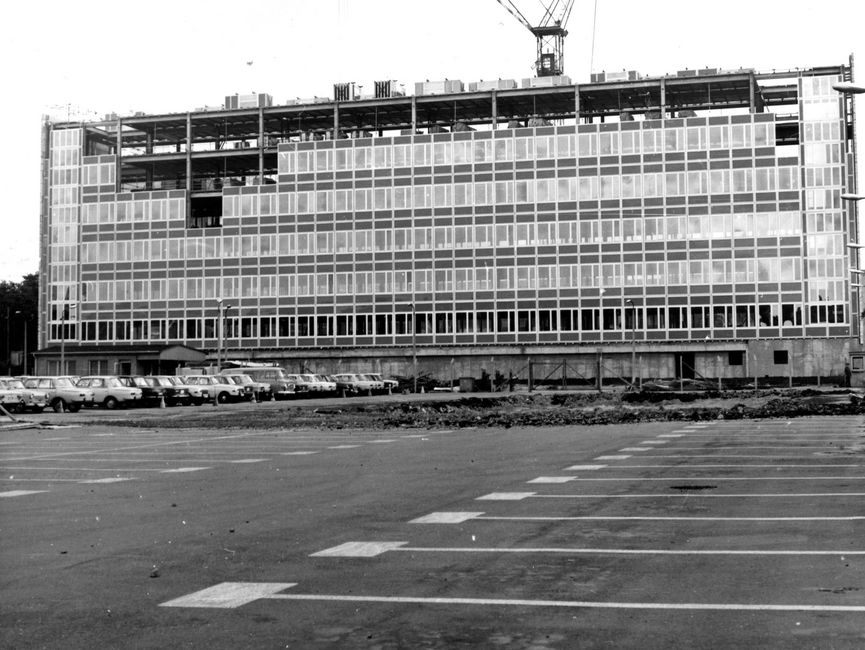
New service buildings on Gotlindestrasse: Six buildings were erected with 474 new offices
Quelle: BArch, MfS, VRD, Foto Nr. 42, Bild 7

In preparation for construction of the supply building, House 18, residential buildings are torn down on Normannenstrasse and Ruschestrasse, 1976.
Quelle: BArch, MfS, VRD, FoNr. 3, Bild 1

House 15 of the Stasi headquarters in Berlin-Lichtenberg was completed in 1978 and contained more than 1,100 offices as well as the laboratory, workshop and storage rooms of the Central Department for Reconaissance
Quelle: BArch, MfS, SdM, Fo, Nr. 19, Bild 6
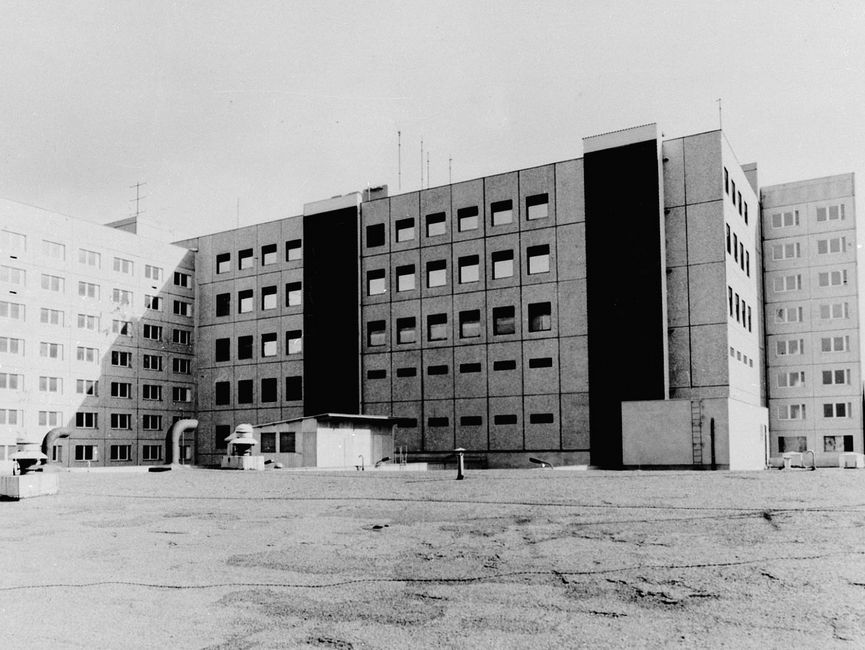
After demolition of the older structures on Magdalenenstrasse, a new building complex was constructed between 1981 and 1985.
Quelle: BArch, MfS, VRD, 6145, Bild 6
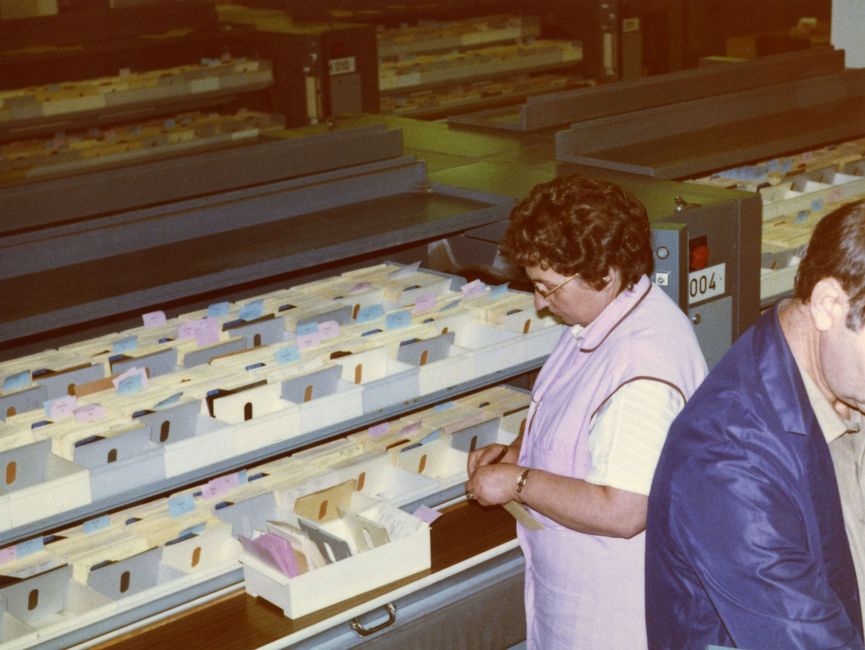
A staff member of Department XII using a paternoster index cabinet conaining index cards of the central persons index F16, around 1985
Quelle: BArch, MfS, Abt.XII, Fo, Nr. 92, Bild 2

House 18 served as a supply, service and conference centre for the employees working in the Stasi headquarters. They had exclusive use of a supermarket and a row of businesses that were spread across 6.500 square metres and included a hairdresser, travel agency, souvenir shop and bookstore.
Quelle: BArch, MfS, VRD, Fo, Nr. 3, Bild 19

The large dining hall was also used for Stasi staff meetings, such as this meeting held in preparation of the 11th SED Party Congress in 1986.
Quelle: BArch, MfS, ZAIG, Fo, 1448.
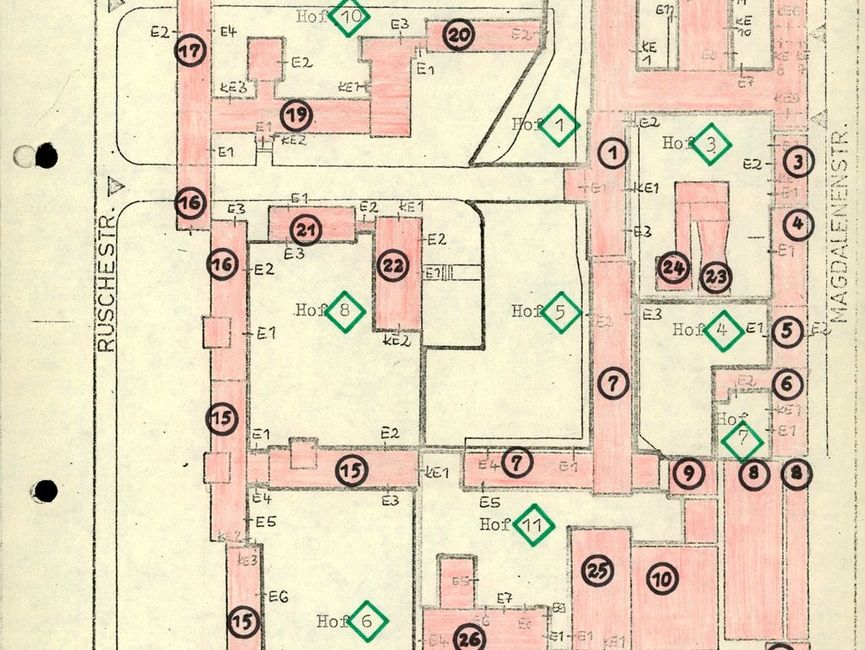
The Stasi general plan from 1982 shows the layout and designation of service buildings at the headquarters in Berlin-Lichtenberg. Each service building has a number which later became the building’s name. Some of the number designations continue to be used today.
Quelle: BArch, MfS, BdL/Dok., Nr. 2474, Bl. 173
The End of the Stasi
In the course of the Peaceful Revolution of 1989/90 courageous citizens pushed themselves onto the premises of the Ministry for State Security, adding to the movement that ended the work of the Stasi and saved the records from destruction. “Freedom for my File” was a central slogan of the citizen’s movement. It expressed the deep rooted desire of many people to find out what types of information the Stasi had gathered about them and how that had changed the course of their lives.
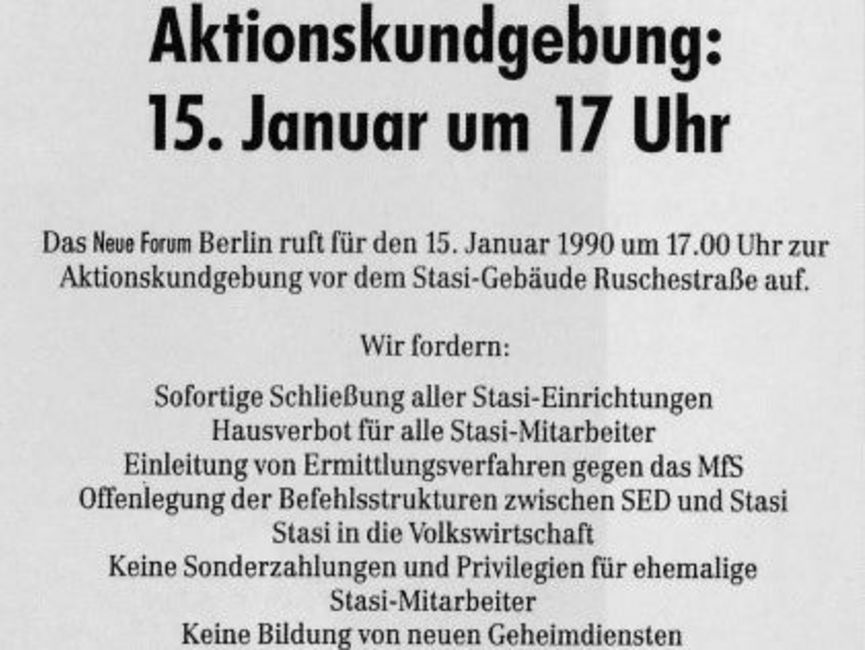
Aufruf vom Neuen Forum
Quelle: RHG
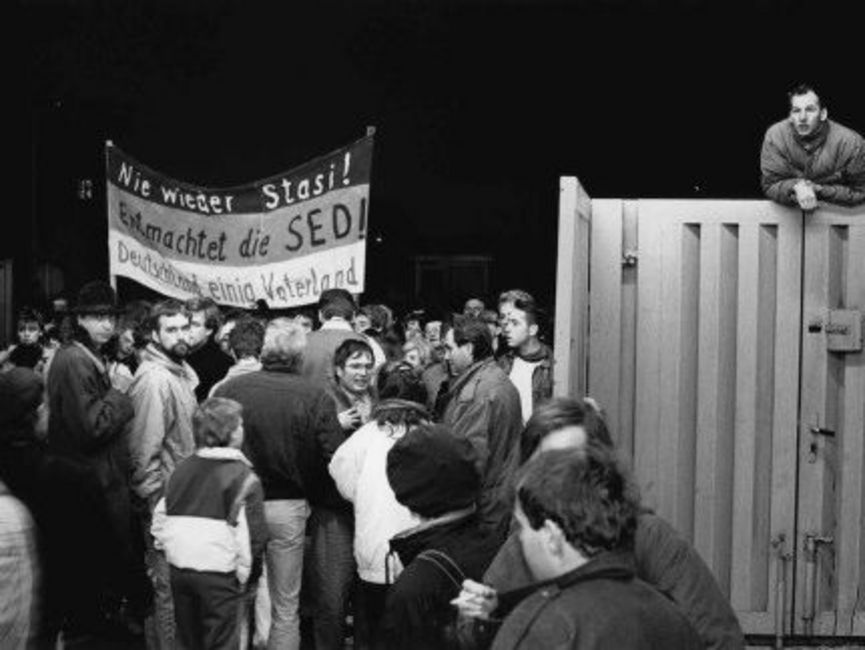
Menschen drängen am 15. Januar 1990 auf das Gelände der Staatssicherheit in Berlin.
Quelle: BArch/Schoelzel
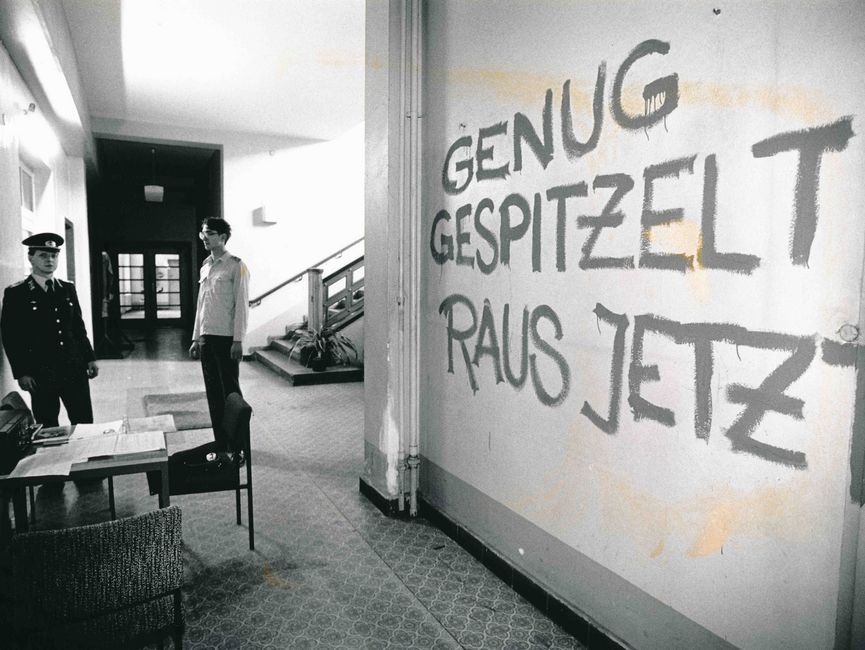
Nach der Erstürmung des Stasi-Geländes am 15. Januar 1990 maltenDemonstrierende die Forderung „Genug gespitzelt raus jetzt!“ an eineWand eines Gebäudes der Stasi.
Quelle: BArch/Schölzel

Aktenbündel und Säcke mit zerrissenen Unterlagen im sogenannten "Kupferkessel" im Haus 7, 1992.
Quelle: Bundesregierung B 145 Bild-00332591 / Schambeck, Arne
Stasi Headquarters. Campus for Democracy
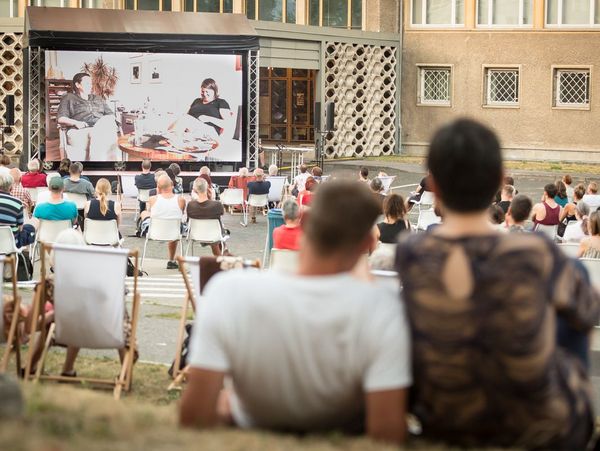
Annual outdoor cinema on the Campus for Democracy
Quelle: BArch / Witzel
Site of Repression, Site of the Revolution, Site of Reflection
Today it is a place where these injustices of the past are addressed and connected to discussions about contemporary conflicts and values of society. The Campus is home to the Robert Havemann Society with its archive of the GDR opposition movement and the ASTAK Association running the Stasimuseum. The Stasi Records Archive has its central archive location here. Individual and group visitors can tour the grounds, the archives and the exhibitions as well as attend events.