Today, this former bastion of the secret police is an educational site about dictatorship and resistance and a place to learn about democracy. Civil society organisations, such as the Robert Havemann Society with the the Archive of the GDR Opposition the ASTAK Association with the Stasi Museum, conduct their work at this site. The Stasi Records Archive runs its central archive from here as well. Individual visitors and groups can participate in tours of the grounds, archive and exhibition and can also attend events here.
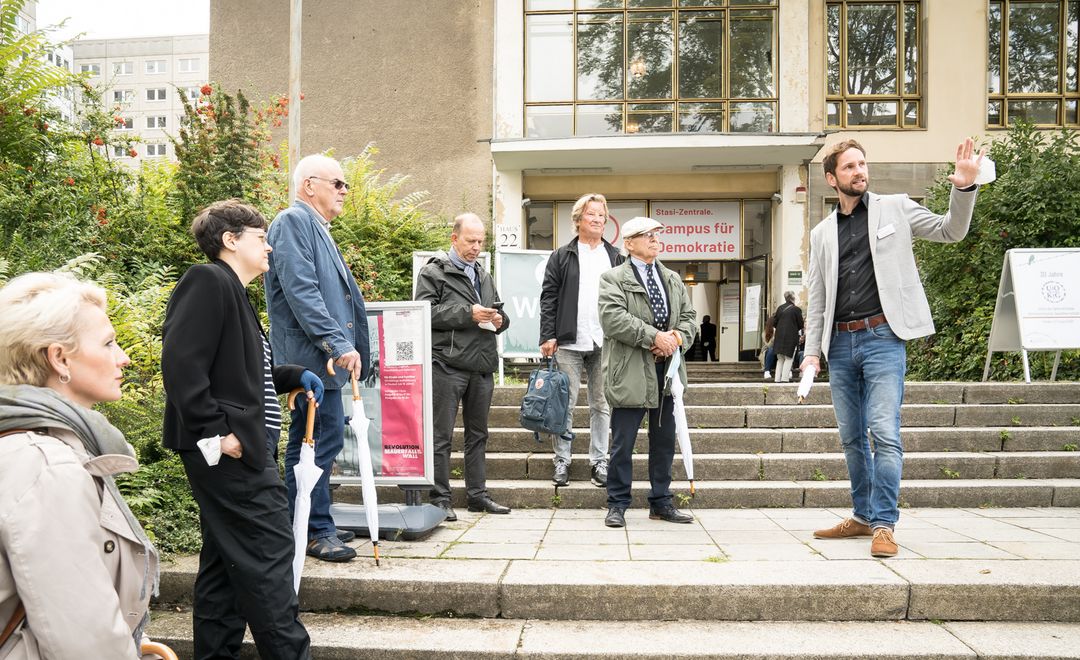
Activities Offered on the Grounds
Visitors Centre
The Visitors Centre of the Campus for Democracy is located on the ground floor of House 22. It is open daily from 10 a.m. to 6 p.m., providing information about what’s currently on offer at the historical site. A model of the grounds and site map of the Stasi headquarters invite visitors to explore the area. Publications are on display here and can also be purchased. Free audio guides for the open-air exhibition ‘Revolution and the Fall of the Wall’ are available here.
Stasimuseum
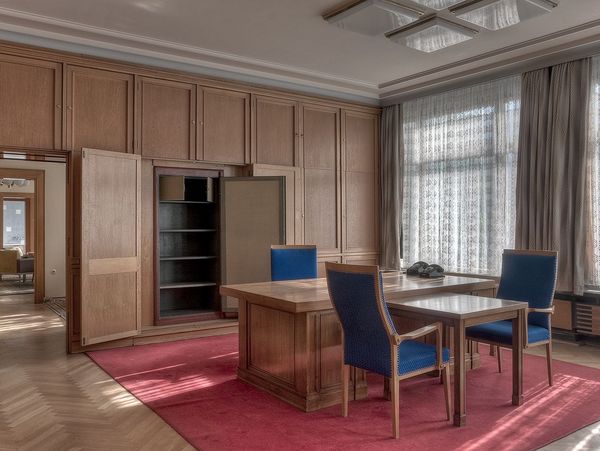
Visitors to the Stasi Museum can explore the former offices of Stasi Minister Erich Mielke, preserved in their original form.
Quelle: ASTAK/Steer
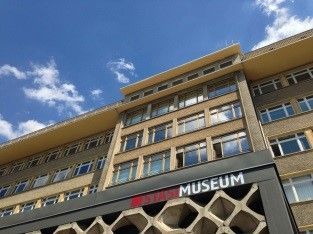
The Stasimuseum is located in House 1.
Quelle: ASTAK/Steer
The exhibition “State Security in the SED Dictatorship” is located in House 1 with the former offices of the Minister for State Security a central site of the apparatus of repression. It explains the structure, development and work methods of the Stasi. Who were the perpetrators? What was their mission? And how did they go about monitoring and persecuting the GDR population? In addition to the offices of Stasi Minister Erich Mielke, which are preserved in their original form, there are many different objects on display, including special cameras, wiretaps, forced entry tools and equipment used to secretly open letters.
Open-Air-Ausstellung "Revolution und Mauerfall"
Die Dauerausstellung im Innenhof der Stasi-Zentrale dokumentiert an einem Ort der Friedlichen Revolution ihre wichtigsten Stationen – von den Anfängen des Protests über den Mauerfall bis zur Deutschen Einheit. Im Mittelpunkt der Schau stehen jene Menschen, die die Revolution vorantrieben und die kommunistische Diktatur zu Fall brachten. Besucherinnen und Besucher können die kostenlosen Audio-Guides für die Open-Air-Ausstellung im Besucherzentrum in Haus 22 ausleihen.
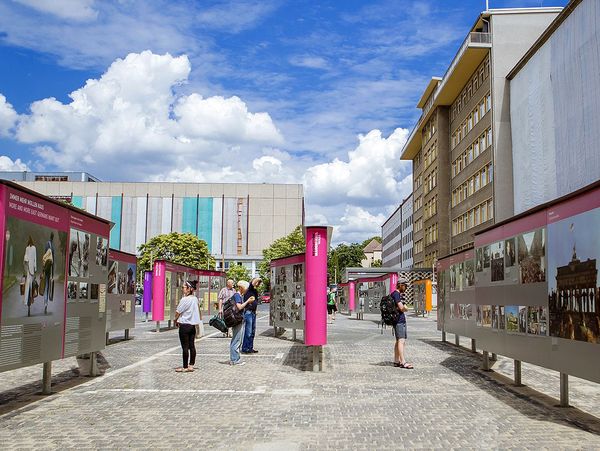
Ausstellung der Robert-Havemann-Gesellschaft auf dem Innenhof der Stasi-Zentrale.
Quelle: Robert-Havemann-Gesellschaft / Oana Popa
Exhibition "Access to Secrecy"
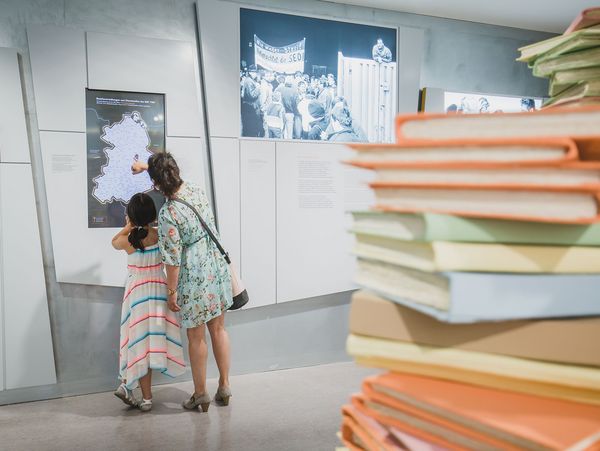
Inside the interactive exhibition
Quelle: BArch
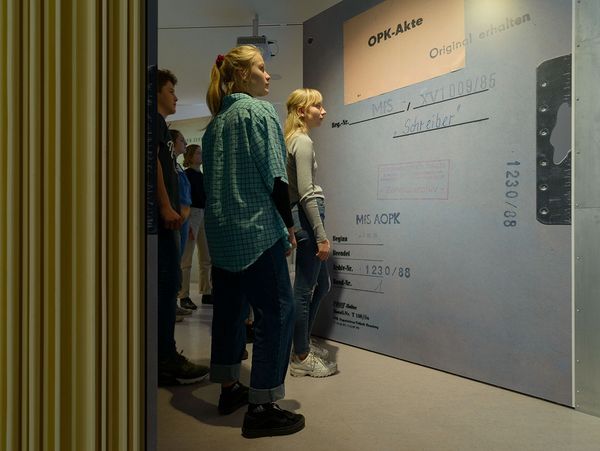
Walk-in files, interactive media stations and original objects provide insight into the archive of the GDR secret police
Quelle: BArch/Dresen
How did the Stasi store, analyse and use the information it gathered about individuals? This is the first exhibition presenting the foundations and content of the GDR secret police archive. With ‘walk-in’ files, interactive media stations and original objects, ‘Access to Secrecy’ makes it possible to experience the archive at the historic site. Tours of the exhibition and special project days for school groups are offered regularly.
About half of the files left behind by the MfS are stored in the archive buildings of the former Stasi headquarters. The Stasi Records Archive safeguards approximately 111 kilometres of files as well as vast numbers of photographs, videos and audio recordings and makes them available on request to individuals, media representatives and research institutes.