The headquarters of Stasi Minister Erich Mielke were located in the central building on the grounds of the State Security in Berlin-Lichtenberg. This is where important conferences and meetings with Mielke and his deputies were held. Soviet liaison officers and secret police delegations from other socialist states were also received in House 1. It was from here that Mielke issued orders and directives to the ministry’s main departments, the 15 district administrations and 216 county and on-site offices in the GDR. A decisive factor in all of this were the guidelines set by the party leadership of the Socialist Unity Party, the SED.
People who opposed the state socialism practised in the GDR were intimidated, ostracised and, in some cases, punished. These measures were applied both to the GDR’s general population as well as to the Stasi’s own ranks. Mielke impressed upon his staff the importance of being everywhere at once and staying vigilant so that alleged traitors and enemies could be promptly identified and apprehended. Adherence to secrecy and maintaining the military and internal order was carefully monitored. Misconduct led to disciplinary action.
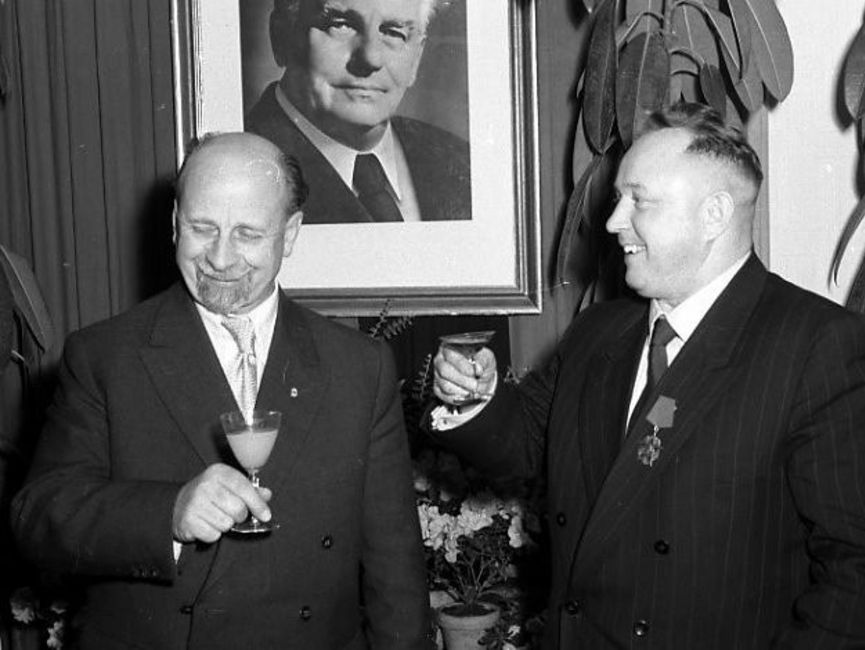
SED leader Walter Ulbricht (left) and Erich Mielke (right) at a reception in the Stasi headquarters in the late 1950s.
Quelle: BArch, MfS, ZAIG, Fo 1558, Bild 66
The MfS and Ethiopian Ministry for State Security signing an agreement in the conference room of House 1, 1987.
Quelle: BArch, MfS, ZAIG, Fo 2516, Bild 6
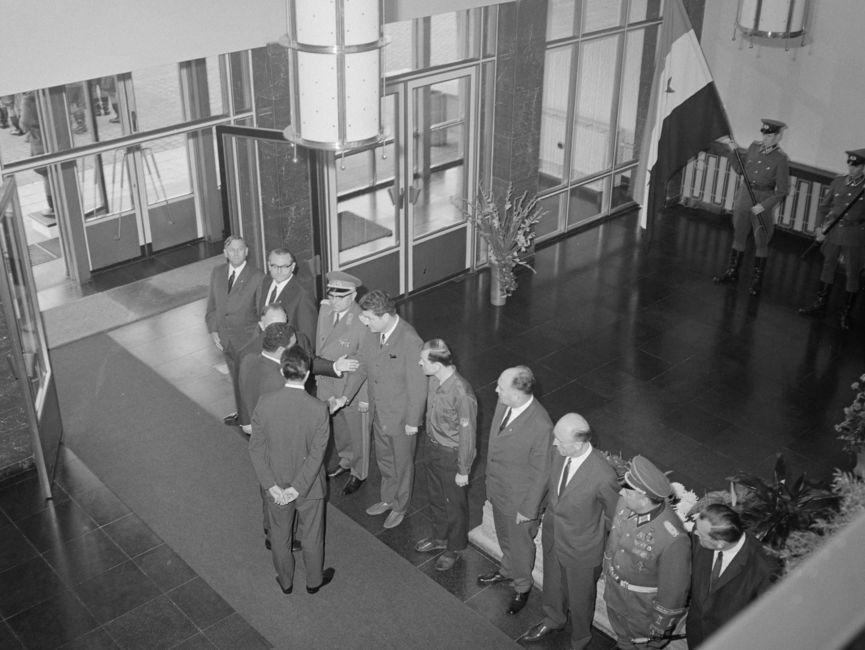
Visit by a delegation from Syria, 1968
Quelle: BArch, MfS, ZAIG, Fo 1605, Bild 24
Conference room in House 1: Erich Mielke congratulates Markus Wolf on his 65th birthday, 1988
Quelle: BArch, MfS, ZAIG, Fo 782, Bild 5
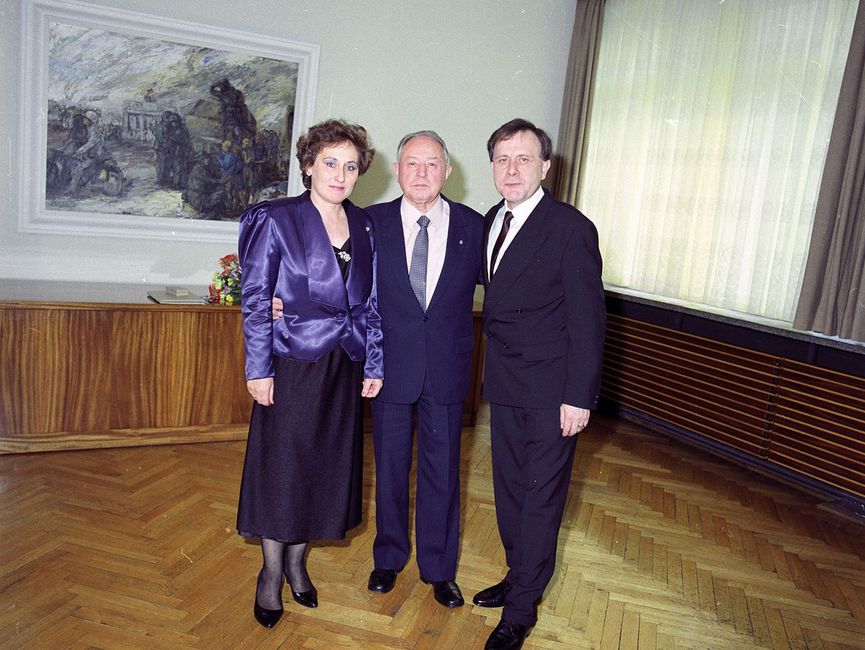
Erich Mielke awards the Fatherland Order of Merit in Gold to the agents Lothar and Renate Lutze in the conference room of House 1, 1987
Quelle: BArch, MfS, ZAIG, Fo 975, Bild 8
Building Measures and Security
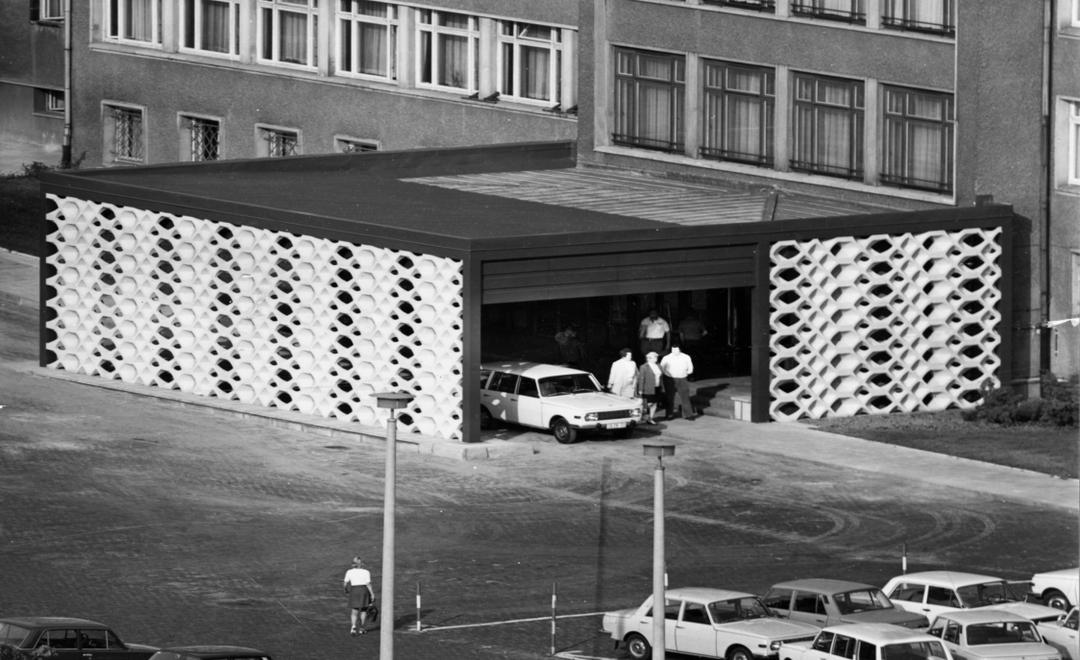
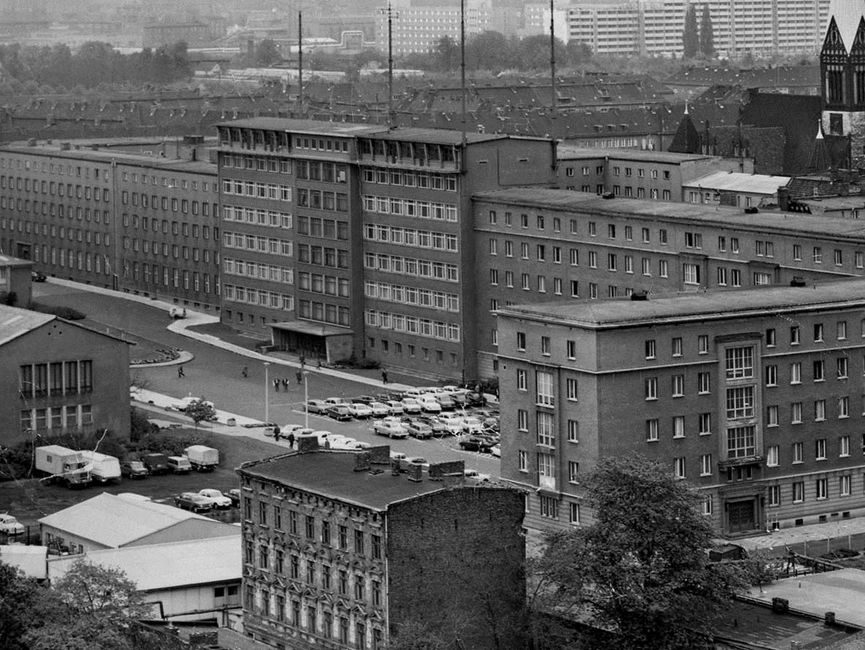
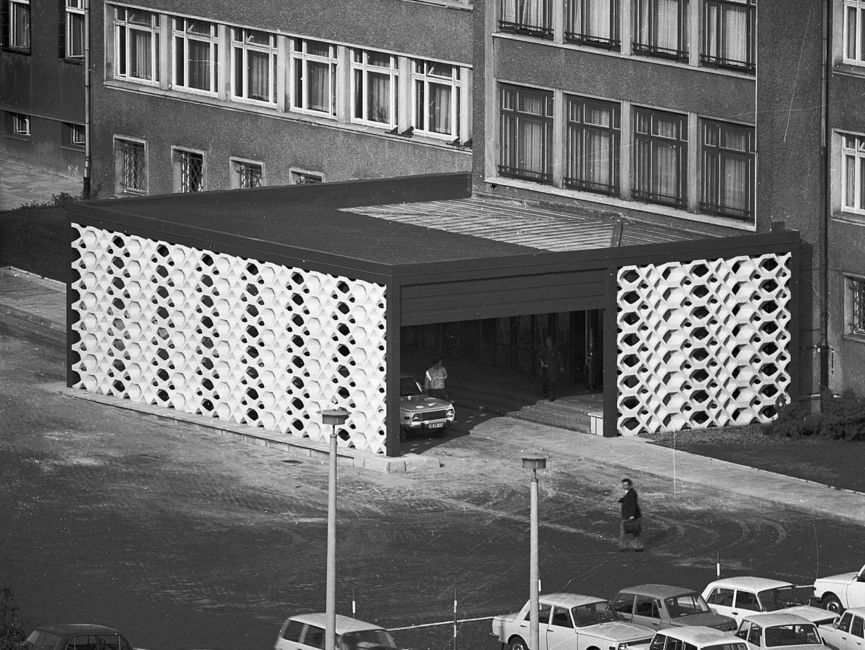
House 1 was constructed under strict secrecy. The minister moved into his offices on the 2nd floor in 1964. The building closed the gap between the "old building" – the former tax office on the corner of Normannenstrasse – and House 7, which was built from 1957 and known as the "new building". The location of House 1 led the Stasi to refer to it as the ‘interim building’ or "Object Z" for many years. The main entrance to House 1 with its glass doors turned out to be a weak point in the design. When the high-rise buildings were erected on Frankfurter Allee in the mid-1970s, the MfS added a structure to the front of the building to block it from view from the outside.
In addition to the leadership offices of the minister and his deputy, Department XII Central Data/Storage also worked on the 5th and 6th floors of the building. The Intelligence Department was located on the top floor until 1979. Three 15-metre-high antenna masts made it possible for the Stasi leaders to communicate with their own offices, the SED leadership and their Soviet "friends".
Photograph of House 1 taken by the Stasi in the 1970s.
Quelle: BArch, MfS, BdL, Fo 227, Bild 26
Erich Mielke and the MfS guard regiment shortly after the minister moved into House 1, 1964
Quelle: BArch, MfS, ZAIG, Fo 1605, Bild 3
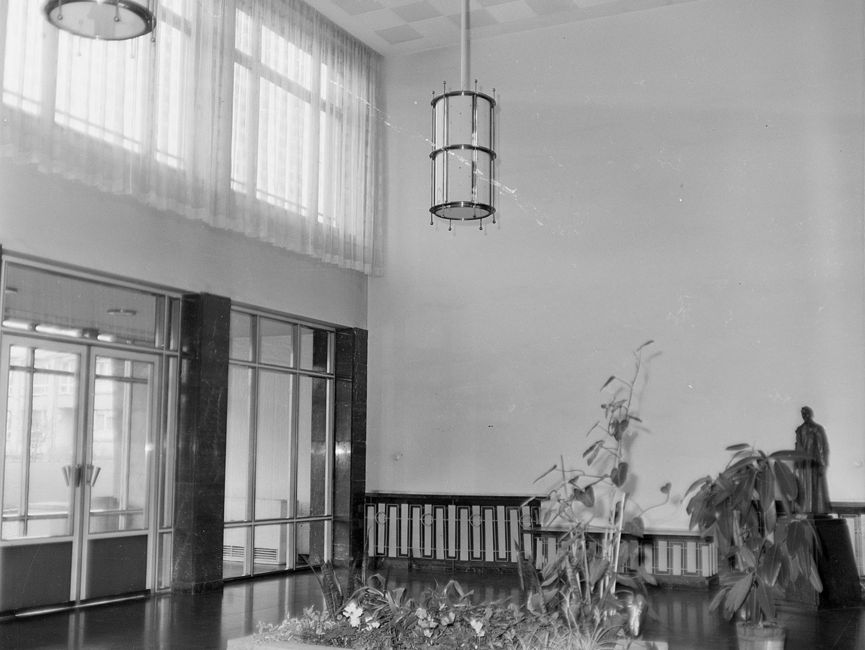
View inside the foyer of House 1, ca. 1970
Quelle: BArch, MfS, VRD, Fo, Nr. 19, Bild 3
To assess how visible the building was to the outside, in 1974 the MfS had a test person stand in front of the main entrance holding a placard and then photographed him from the high-rise residential buildings on Frankfurter Allee.
Quelle: BArch, MfS, ZAIG, Fo 598, Bild 18
A screen structure, referred to as a ‘structural projection’ was added to House 1 in 1975/76. It was designed to block cars and their passengers from view.
Quelle: BArch, MfS, BdL, Fo 227, Bild 8
The Intelligence Department worked from the top floor of the building until 1979.
Quelle: BArch, MfS, ZAIG, Fo 598, Bild 33
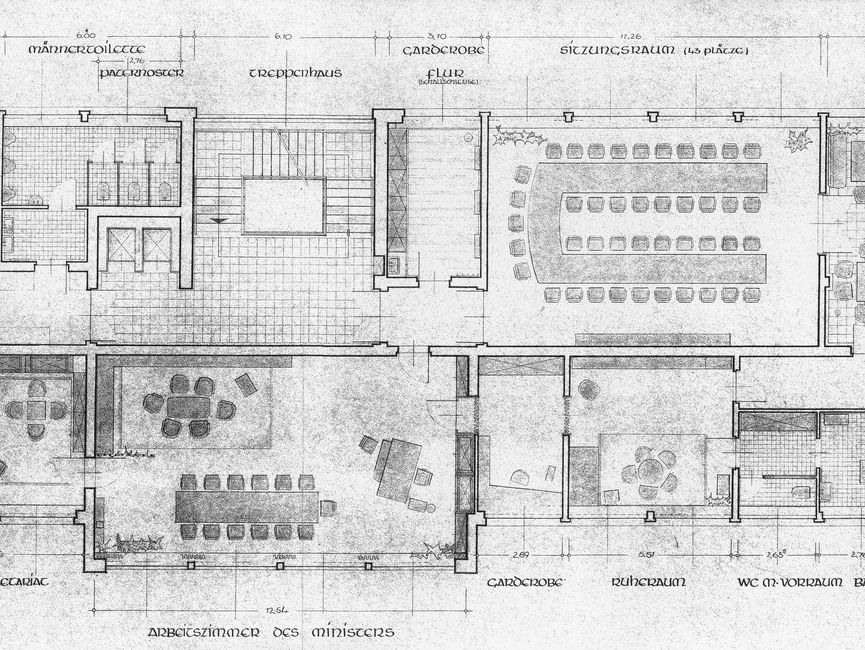
Today, Erich Mielke’s offices, including the minister’s study, the secretaries’ work spaces, a separate rest area and the meeting room, are located on the 2nd floor. It should be noted that today’s 2nd floor was considered the 1st floor under Mielke.
Quelle: BArch, MfS, VRD 10530, S. 239
Inside the Centre of Power
In appointing Erich Mielke as minister, Walter Ulbricht strengthened his own position. Party leader Ulbricht was under the impression that Mielke’s predecessors, Wilhelm Zaisser and Ernst Wollweber, had become too powerful and independent because of their close ties to Moscow and the Soviet secret service. He thought that the new minister would be a devoted follower and not pose a risk to him because of his criminal past. Among other things, Mielke had participated in the murder of two policemen on Berlin's Bülowplatz in August 1931 and fled to Moscow to avoid arrest.
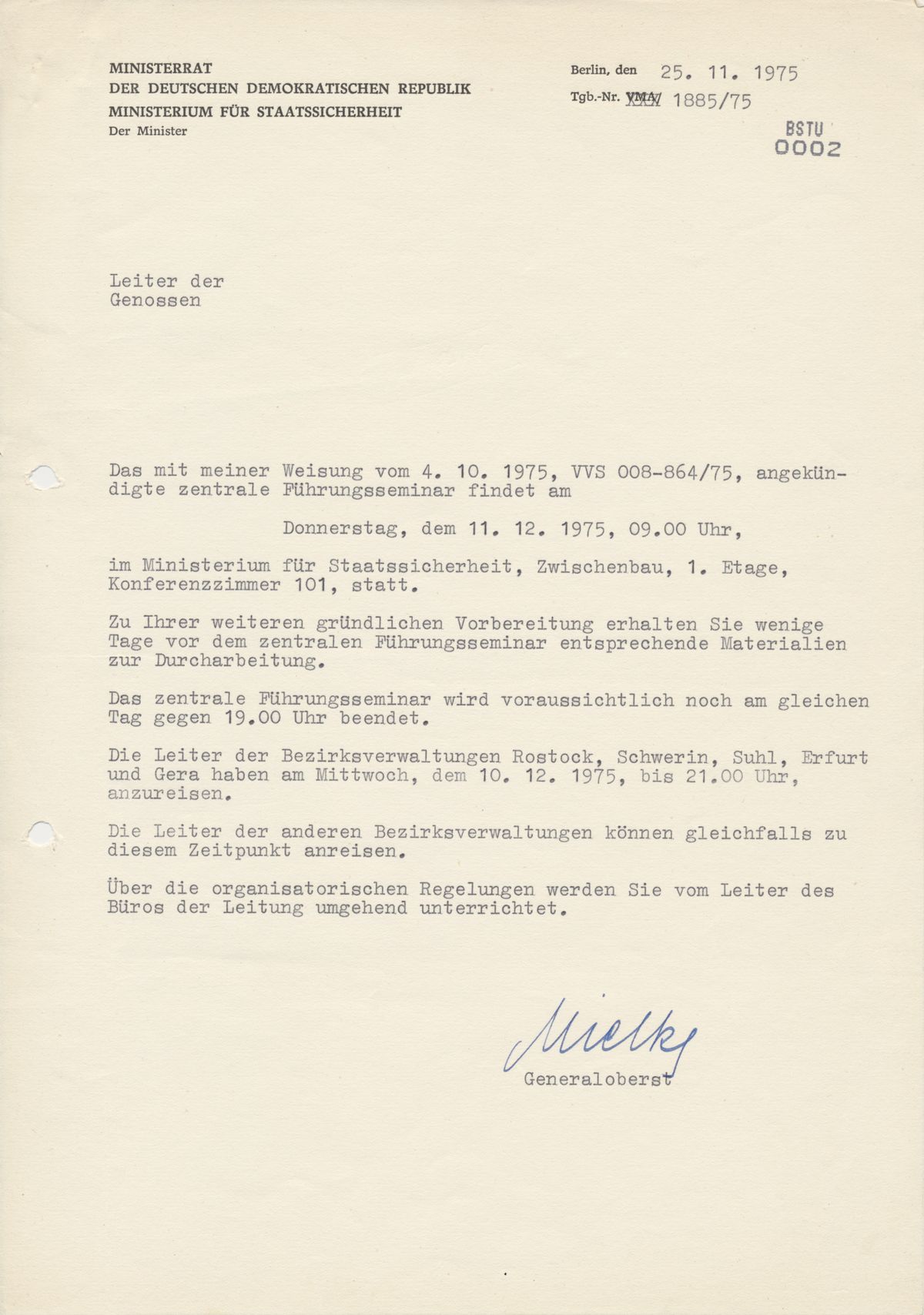
The minister attended various events in the conference room on the 1st floor. In addition to meetings of the MfS council, Erich Mielke summoned the heads of the district administrations here. To ensure that no one arrived late, Mielke demanded that the heads of the branch offices, which were located far from Berlin, arrive the evening before.
Photo of Erich Mielke from his cadre card
Quelle: BArch, MfS, HA KuSch, Nr. 1567
Invitation to a service meeting signed by Mielke.
Quelle: BArch, MfS, BdL 8663, S. 2